
Gorilla trekking in Rwanda is often planned around one extraordinary morning. Where you stay before and after that trek can shape something bigger: whether your travel spending supports the people, places, and landscapes that make the experience possible. Knowing how to find sustainable stays in Rwanda means looking beyond a leafy garden or an eco-friendly label and asking where your money goes, who benefits, and how a property operates every day.
For travelers heading to Volcanoes National Park, the right stay should make logistics easier while helping you travel with greater purpose. Sustainability is not one feature. It is a set of choices - from local employment and food sourcing to waste reduction, fair community partnerships, and respect for the surrounding environment.
Start with what “sustainable” means for your trip
A sustainable stay does not have to be perfect to be meaningful. Rwanda’s hospitality sector includes properties of different sizes, budgets, and operating models. A small guesthouse may have a deep connection to local farmers and staff, while a larger lodge may be better equipped to manage water, energy, and waste at scale.
Start by deciding what matters most to you. If community impact is your priority, look for a social business or a stay that clearly explains how it supports local education, health care, conservation, or livelihoods. If environmental impact leads your decision, focus on practical measures such as refillable water, renewable energy, composting, laundry policies, and responsible waste handling.
For many guests, the strongest choice combines both. It offers genuine comfort after a long day outdoors, employs local people, buys locally where possible, and treats sustainability as part of its daily operations rather than a marketing theme.
How to find sustainable stays in Rwanda before you book
The best clues are usually found in the details. Read a property’s own description carefully, but do not stop at broad phrases such as “eco-friendly” or “green.” Responsible accommodations should be able to explain what that means on the ground.
Look for clear information about local staffing, community initiatives, garden-to-table dining, artisan partnerships, energy use, water conservation, and waste reduction. Specific language is more useful than vague promises. “We source vegetables from nearby growers” tells you more than “we support the community.” “Profits fund education programs” is stronger when the property explains which programs and how guests contribute.
Reviews can also help, especially when guests mention the people behind the stay. Comments about warm local hospitality, fresh regional food, thoughtful service, or a visible community connection often reveal more than a generic sustainability badge.
It is also worth contacting the property directly. Ask a simple, respectful question: “What does sustainability look like in your daily operations?” A sincere host will welcome the conversation. Direct booking can be a thoughtful choice too, because it may leave more of your payment with the accommodation and its local team instead of third-party booking fees.
Look for impact that is visible and specific
Sustainability has become a popular travel term, so it helps to know the signs of real commitment. The most credible stays tend to share their practices without overstating them. They acknowledge that operating responsibly is ongoing work, especially in a destination where supplies, infrastructure, and seasonal conditions can vary.
Consider these four areas when comparing accommodations:
- Local livelihoods: Does the property hire from nearby communities, train staff, work with local guides, buy from farmers, or stock locally made products?
- Community investment: Does it support a defined school, clinic, cooperative, youth program, or conservation initiative? Is the relationship long-term?
- Environmental care: Are there practical efforts to reduce single-use plastics, conserve water and electricity, manage waste, and protect gardens or natural areas?
- Respectful guest experiences: Does the property encourage responsible trekking, ethical cultural encounters, fair payment for guides and artisans, and a lighter footprint in the region?
A property does not need to perform perfectly in every category to deserve consideration. What matters is honesty, consistency, and a willingness to make its impact part of the guest experience.
Choose location carefully, especially near Volcanoes National Park
For gorilla trekking and golden monkey trekking, staying close to the park can reduce early-morning stress and unnecessary driving. A convenient base in the Kinigi area gives you more time to rest, enjoy breakfast, prepare your gear, and reach the park office without a long transfer.
Location also affects sustainability in quieter ways. Less driving can mean lower fuel use, but proximity alone does not make a stay sustainable. Balance convenience with the property’s actual practices and community ties. A beautiful lodge far from the park may still be the right choice if it has strong environmental systems and a meaningful local model, while a nearby option may suit travelers who value simple logistics and a smaller travel footprint.
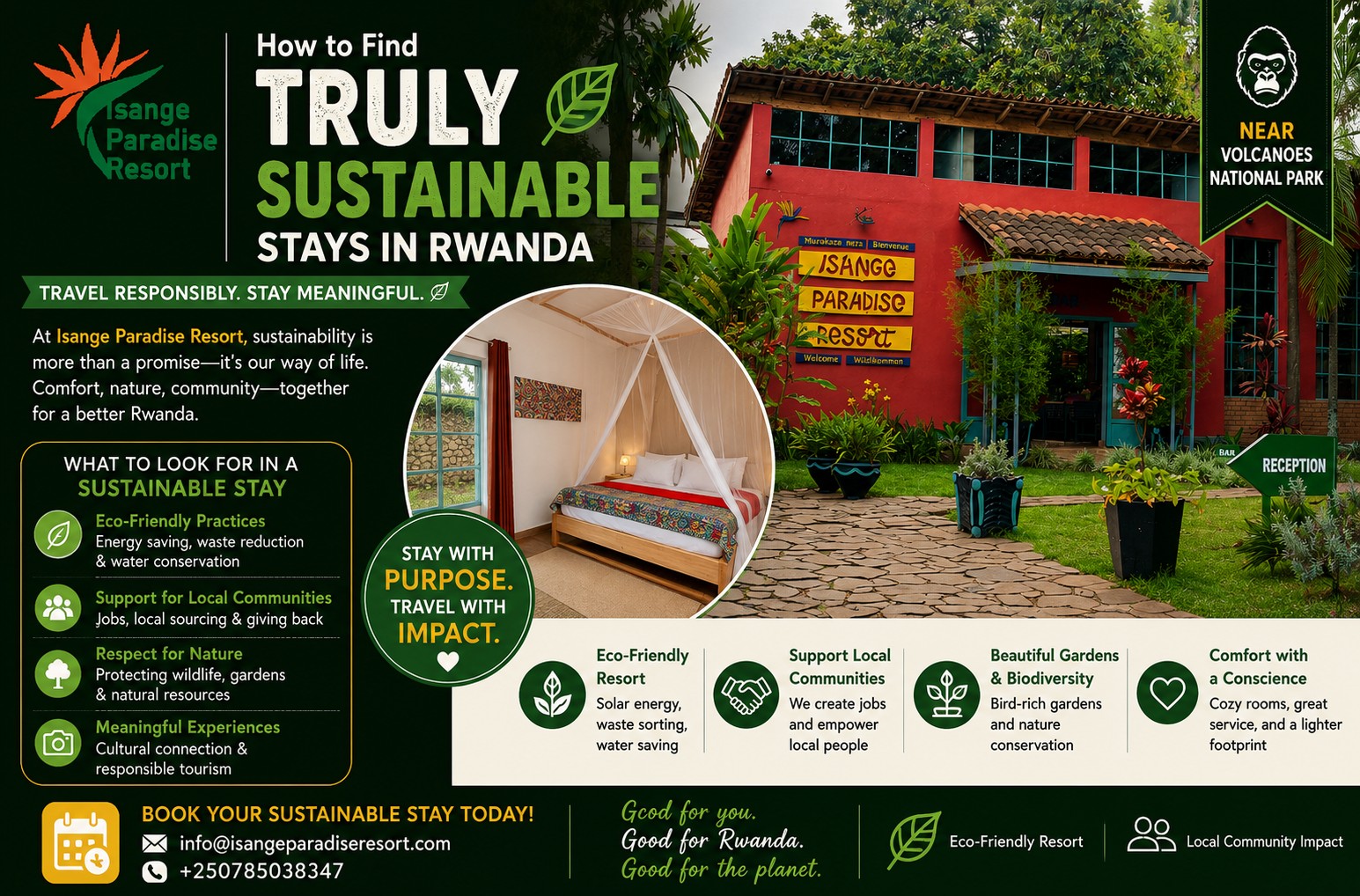
For travelers who want both access and impact, Isange Paradise Resort offers a purpose-led accommodation base near Volcanoes National Park, with profits reinvested into education, health, and community initiatives through Future 4 Kids. That type of social business model gives guests a direct way to connect a comfortable stay with lasting local benefit.
Ask about food, water, and waste without expecting perfection
Food is one of the most enjoyable ways to support a destination. Ask whether the restaurant uses locally grown produce, Rwandan coffee, or ingredients from nearby suppliers. A menu that changes with the season can be a positive sign, even if it is less extensive than an imported hotel menu.
Water deserves attention as well. Rwanda’s tap water is not always suitable for visitors to drink, so bottled water may be common. A more responsible property may provide refill stations, large dispensers, glass bottles, or clear guidance on reducing plastic waste. Bring a reusable bottle if you can, and ask before purchasing several small plastic bottles for your room or trek.
Waste management is more complicated than it looks. Remote areas may have fewer recycling options than major cities, and not every item labeled recyclable will be processed locally. Instead of demanding a perfect zero-waste system, look for practical efforts: reduced packaging, refillable amenities, composting where feasible, reusable service ware, and thoughtful purchasing decisions that prevent waste in the first place.
Match your room choice to your real needs
A sustainable trip is often a less wasteful trip, and that can begin with booking the space you will actually use. Couples may prefer a comfortable room. Families or small groups may create less duplicated energy use and packaging by sharing an apartment or guesthouse option. Adventure travelers may enjoy a tented stay when it is well managed and appropriate for the weather.
Do not confuse simplicity with sacrifice. After trekking through the forest, you may value a hot shower, nourishing food, reliable Wi-Fi, secure storage, and a peaceful place to recover. Responsible hospitality should make it easier to enjoy Rwanda, not ask guests to compromise on basic comfort or safety.
If you are planning a retreat, wedding, cycling trip, or group celebration, ask how the property manages events. Shared meals, reusable décor, local catering, and coordinated transport can reduce waste and create more direct economic benefit than a standard event package built around imported materials.
Make your stay part of responsible travel
Your choices as a guest matter alongside the property’s efforts. Pack a reusable bottle, a small day bag, and toiletries that will not create unnecessary single-use waste. Use towels and linens for more than one night when it makes sense. Turn off lights and heating when you leave the room, especially in cooler mountain areas where energy needs can be higher.
Be equally thoughtful in the communities you visit. Buy crafts directly from makers or through transparent local outlets. Choose licensed guides and follow park rules closely. Wildlife encounters in Volcanoes National Park depend on careful protections, so keep your distance, listen to rangers, and never treat a trek as a private photo opportunity.
Most of all, let your questions lead to better choices, not guilt. Sustainable travel in Rwanda is about showing respect through practical decisions: selecting a stay with a clear purpose, spending locally, minimizing avoidable waste, and giving the destination as much care as it gives you. When your accommodation turns rest, adventure, and community benefit into one experience, your journey can stay with Rwanda long after you return home.







Comments
Be the first to share your thoughts.
Leave a comment